Unfinished Obelisk in Aswan : 7 Things They Don't Tell You

- Sep 24, 2024
- 3,413
The Unfinished Obelisk in Aswan stands among Egypt’s most remarkable monuments. Yet, why was this massive structure left unfinished? Today, you can still spot cracks, ramps, and tool marks that remain untouched for centuries. The site reveals much about ancient construction while sparking even more questions. Do you want to uncover why the Unfinished Obelisk holds greater value than many completed monuments in Egypt?
Unfinished Obelisk – Essential Overview
The Unfinished Obelisk in Aswan is one of Egypt’s most revealing monuments. Carved directly from pink granite, it offers a rare look into ancient engineering methods. If completed, it would have stood over 42 meters long and weighed around 1,200 tons—the largest obelisk ever attempted.
Unlike other monuments, this site shows the work in progress. Visitors still see tool marks, ramps, and the cracks that forced builders to abandon it. That makes the Unfinished Obelisk more valuable than many finished structures—it tells the story of ambition, failure, and real human challenges.
What It Is and Why It Matters
- This monumental structure is a massive granite pillar. It remains in its original Aswan quarry.
- Early in the 20th century, it was found concealed in sand.
- The creation of this piece was likely ordered by Queen Hatshepsut. She was a powerful and influential pharaoh during the New Kingdom.
- If it had been finished, it would have been the largest ancient obelisk ever made.
- It would have been about 42 meters tall. Moreover, its weight would have been around 1,200 tons.
- The site is much more than just a stone quarry. Rather, it is an open-air museum. It gives us rare insights into ancient construction methods.
- Therefore, the obelisk and its surrounding quarries are a UNESCO World Heritage site. This protection ensures its survival for future visitors.
Why Work Stopped on the Obelisk
- A deep crack appeared in the stone during carving.
- Structural flaws made it too risky to lift or move.
- Ancient tools couldn’t repair or reinforce such a fracture.
- Continuing would have wasted resources and risked failure.
- Frozen in time, the obelisk remained affixed to the bedrock..
- This accident preserved quarrying secrets that modern visitors can study today.
We are eager to meet you, so reserve your Egypt tour packages right away and have a wonderful time.
Quick Facts: Unfinished Obelisk in Aswan
Feature | Details |
Location | Northern granite quarries, Aswan |
Planned Length | Around 42 meters |
Estimated Weight | Between 1,100 and 1,200 tons |
Stone Type | Pink granite |
Commissioned By | Likely Queen Hatshepsut |
Historical Period | New Kingdom, 18th Dynasty |
Why Abandoned | Deep cracks made it unsafe to move |
Today’s Status | Still fixed to bedrock, part of an open museum |
Why You Should Visit
- Walk through the ancient quarry where pharaohs sourced their granite.
- See chisel marks, ramps, and cracks that reveal real engineering challenges.
- Compare this obelisk to the finished ones in Luxor, Karnak, and abroad.
- Experience a site that blends ambition, craftsmanship, and human error.
- Learn how failures shaped history just as much as great successes.
Read about: Facts about Abu Simbel Temple
The Legacy of a Flawed Gem
An Open-Air Museum of Ancient Knowledge
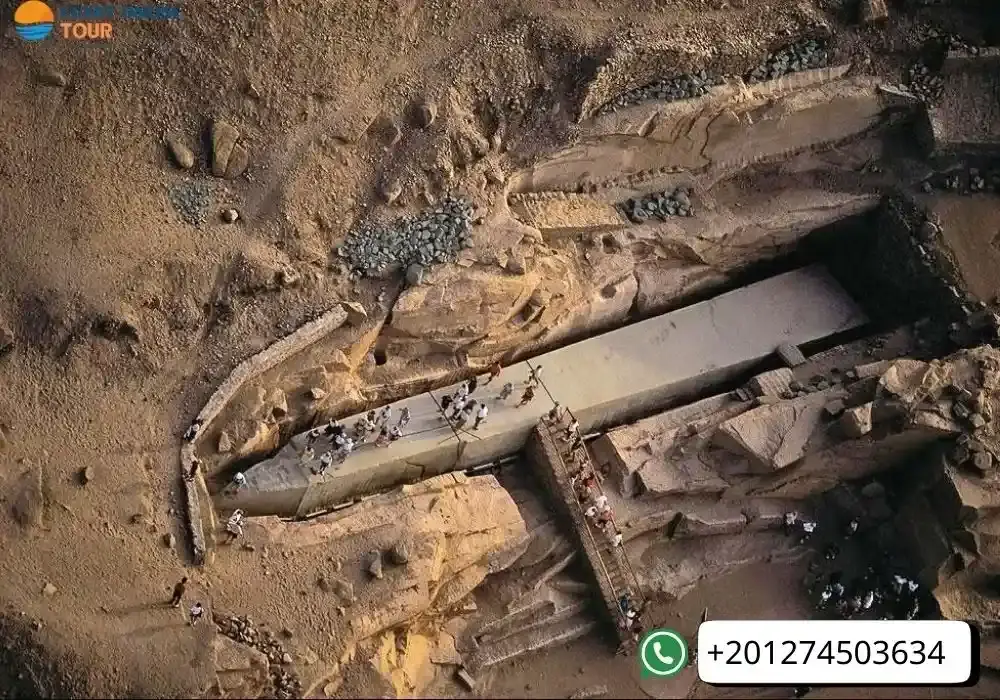
The Unfinished Obelisk offers a visual lesson for everyone. We can still see the marks from their tools. Furthermore, there are ochre-colored lines. These lines show exactly where the workers were carving the stone. The project was a failure, but it is a success in history. It provides us with a unique window into the methods of a bygone era. It shows us that even ancient civilizations had to deal with problems. The Egyptian government now formally protects the obelisk. It now serves as an open-air museum for the world to see.
A Comparison of Obelisks
To help you understand the sheer size of the Unfinished Obelisk in Aswan, consider how it compares to other famous examples. Its incomplete state is what makes it so important for study. This table shows how it would have measured up to others that stand completed today.
Name of Obelisk | Original Location | Current Location | Estimated/Actual Height (Meters) | Estimated/Actual Weight (Tons) |
Unfinished Obelisk | Aswan Quarry | Aswan, Egypt | 42 | 1,200 |
Lateran Obelisk | Karnak Temple, Thebes | Rome, Italy | 32.18 | 455 |
Luxor Obelisk (Paris) | Luxor Temple | Paris, France | 22.83 | 250 |
Thutmose III Obelisk | Karnak Temple, Thebes | Istanbul, Turkey | 20.4 | 380 |
Washington Monument | (N/A) | Washington, D.C., USA | 169 | 82,421 |
Egypt Online Tour Tip for Travelers
When in Aswan, don’t miss the Unfinished Obelisk. It may not rise to the sky, but it tells a story no standing monument can. You’ll leave with a deeper respect for the skill—and limits—of ancient Egyptian builders.
Don't miss the chance to see it with Egypt Adventure Tours.
History & Date of the Unfinished Obelisk in Aswan
A journey into the past reveals the secrets of ancient Egypt. The Unfinished Obelisk in Aswan is an incredible sight. This unique historical site gives us a rare glimpse into the impressive world of ancient stonework.
By studying this site, historians better understand both ancient engineering methods and the challenges that workers faced thousands of years ago.
Commissioned in the New Kingdom (Hatshepsut)
- Ordered during the reign of Queen Hatshepsut, 18th Dynasty (1479–1458 BCE)
- Planned to be the largest obelisk ever built in ancient Egypt
- Designed to reach about 42 meters and weigh over 1,100–1,200 tons
- Likely meant for Karnak Temple in Thebes as a symbol of royal power
- Obelisks were sacred monuments dedicated to the sun god Ra
- Hatshepsut used them to celebrate her reign and legitimize her rule
- This project reflected her ambition to leave monuments equal to any male pharaoh
Read about: The History of Ancient Nubia
For a luxurious, comfortable, and unforgettable trip to Egypt, check out Egypt Luxury Tours
Why Work Stopped on the Obelisk
- A large crack appeared during quarrying
- The fracture made the stone unsafe to raise or transport
- Repair was impossible with the tools available at the time
- Abandoning the project saved time and resources
- The obelisk remained attached to the bedrock, frozen in place
- This failure preserved rare details that historians now study
Aswan Granite Quarries and Craft Methods
- The obelisk lies in Aswan’s northern granite quarry
- Aswan granite was prized for its strength and color, used in temples and statues
- Workers carved directly into the bedrock using dolerite pounders
- Dolerite, harder than granite, chipped away at the stone surface
- Wooden wedges were inserted into small cuts, then soaked with water to split the rock
- Trenches, ramps, and tool marks remain visible after 3,500 years
- No metal chisels were used—only stone tools and clever techniques
- The quarry shows the entire process of obelisk carving, step by step
Quick Facts Table
Feature | Details |
Era | New Kingdom, ~1479–1458 BCE |
Purpose | Likely for Karnak Temple |
Quarry Method | Dolerite pounders, wooden wedges |
Reason Abandoned | Large structural crack |
Current State | Still attached to bedrock, open to visitors |
Significance | Shows quarrying tools, ramps, and carving stages |
Why This History Still Matters
- The unfinished obelisk teaches more than many completed ones
- It shows that even skilled builders faced natural challenges
- Cracks in the stone became lessons for future projects
- Visitors see real tool marks and pathways carved 3,500 years ago
- The site highlights Aswan’s role as Egypt’s main granite source
- It connects modern people with the daily work of ancient laborers
The Unfinished Obelisk in Aswan is a story of ambition, failure, and learning. Walking through the quarry, you stand where ancient workers shaped history. Unlike temples that show polished results, this site shows the process and struggle behind them.
If you plan a trip to Aswan, don’t miss it. You will leave with a deeper respect for the builders who shaped Egypt’s golden age.
Read about: Siwa Oasis travel tips
Location & How to Get There
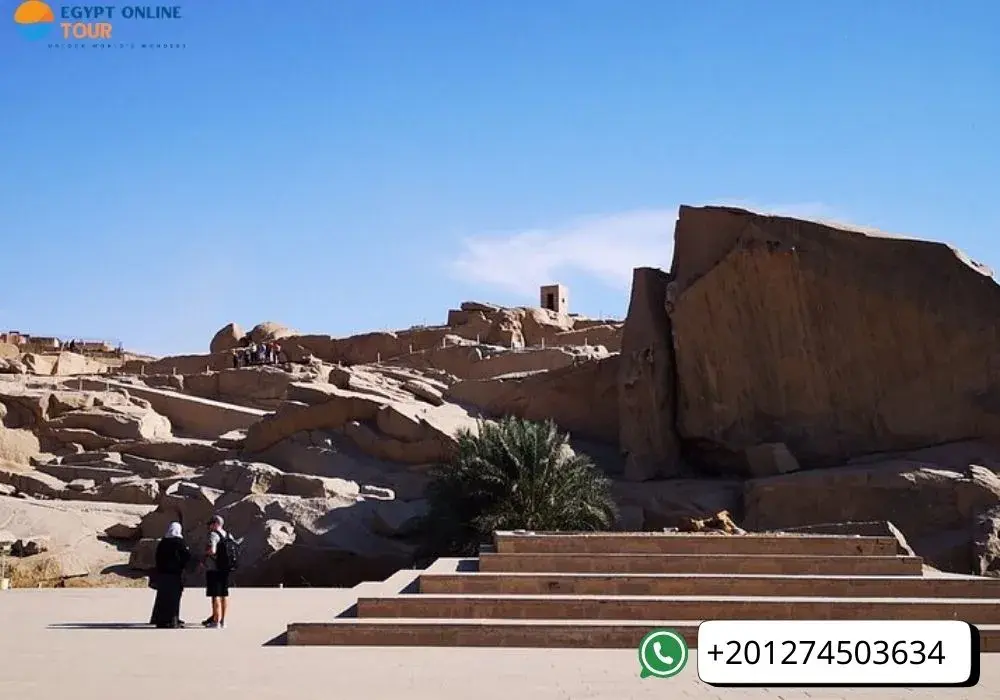
The Unfinished Obelisk in Aswan sits inside the northern granite quarries on the east bank of the Nile. This quarry supplied the granite for many temples and statues in Luxor and Karnak. Today, the site is an open-air museum where visitors can walk around the unfinished monument and see the trenches, tool marks, and ramps used by workers more than 3,500 years ago.
Northern Quarry on Aswan’s East Bank
- Found in Aswan’s Northern Quarry, about 2–3 km from downtown.
- The site is typically open from 8:00 AM to 4:00 PM every day.
- Entry tickets are inexpensive and can be purchased on-site.
- Clear signs in English and Arabic guide you around the quarry.
- The excavated trench is open for visitors to explore and get a close-up look at the obelisk.
- The area is quieter and less crowded than most major temples.
- Photography is allowed without extra fees.
Directions from Corniche, Station, or Airport
From Aswan Corniche
- Just a 10-minute taxi ride (about 30–50 EGP).
- Ride-sharing and tuk-tuks are also available.
- The drive runs along the Nile and is quick even in busy hours.
From Aswan Railway Station
- Only 3–5 km from the station.
- Taxis outside the station can get you there in 8–10 minutes.
- Walking is possible, but not ideal in midday heat.
From Aswan International Airport
- About 18–20 km away.
- Takes around 25–30 minutes by taxi.
- A private transfer costs roughly 100–150 EGP.
- Many hotels and tour operators include airport pick-up and drop-off.
Quick Access Table
Starting Point | Distance / Time | Best Transport Option | Approx. Cost (EGP) |
Aswan Corniche | ~3 km / 10 mins | Taxi / Tuk-tuk | 30–50 |
Aswan Railway Station | ~5 km / 8–10 mins | Taxi / Microbus | 25–40 |
Aswan Airport (ASW) | ~18–20 km / 25–30 mins | Taxi / Private Transfer | 100–150 |
Travel Tips
Tip | Detail |
The ideal time to go | For colder conditions, try the early morning or late afternoon. |
Wear | Comfortable walking shoes; terrain is rocky |
Bring | Water bottle, sunglasses, camera |
Nearby sites | High Dam, Philae Temple, Nubian Museum |
Tour guides | Available at the entrance or through local tour operators |
Reaching the Unfinished Obelisk is quick and simple. Whether you come from the Corniche, train station, or airport, you’ll find the site easy to add to your day. Once there, you’ll walk the same quarry paths as ancient workers and see history left exactly as it was thousands of years ago.
Finding the Unfinished Obelisk in Aswan is quite simple. This next section gives a clear guide on its exact location. Additionally, it provides the best ways for visitors to get there. Therefore, your visit will be easy and well-planned.
Let our local travel experts help you design the perfect itinerary. Whether you're seeking adventure, culture, or relaxation, we've got you covered!
Tickets & Opening Hours
Planning to visit the Unfinished Obelisk in Aswan? I will give you everything you need—where to buy tickets, what to expect, and when to go. You’ll also find tables with prices, timings, and tips to make your visit smooth
Where to Buy and What to Expect
Buying tickets is easy and fast. You can do it either in person or online.
- On-site tickets are sold at the entrance of the quarry area.
- Online booking is available through official tourism platforms or selected tour agencies.
- Ticket desks accept cash in Egyptian pounds. Card payments may not always work.
- Combo tickets are sometimes offered for other nearby sites like Philae Temple or the High Dam.
- Please expect a short wait at the entrance during busy periods.
- Free entry might be available for children under 6 or with a student ID.
- The ticket includes access to walking paths, tool mark sites, and signs in English and Arabic.
What to expect inside:
- Clear signage in Arabic and English
- Staff who speak basic English
- Short security checks at the gate
- Gravel paths and signs near the obelisk
- Open-air area with little shade, so bring water
- No long queues on most days, except in peak season.
Tool marks, cracks, and carved channels reveal how ancient workers shaped stone. The site feels real and raw—history left as it was thousands of years ago.
Ticket Prices and Access Options
Ticket Type | Price (EGP) | Available At | Includes |
Standard Adult | ~80 | Entrance desk | Access to the full site and info signs |
Child (6–12 yrs) | ~40 | Entrance desk | Same as an adult |
Student (with ID) | ~40 | Entrance desk | Must present a valid student ID |
Online Booking | Varies | Tourism websites | May include a guide or transport |
Tour Packages | Varies | Travel agencies | Often include ticket, guide, ride |
Payment is usually cash in Egyptian Pounds. Cards may not work. You’ll often find better flexibility when buying on-site.
Here are the What Are Attractions and Activities to Do in Egypt ? make your vacation memorable, even if you're only visiting Luxor.
Best Times to Avoid Heat and Crowds
The sun in Aswan is strong, especially from May to August. Plan wisely to stay cool and avoid large groups.
- Mornings (8–10 AM): Best for cooler weather and soft light for photos
- Late afternoon (after 3 PM): Less crowded, light is softer
- Midday (12–2 PM): Hottest and busiest—avoid if you can
- Weekdays: Quieter than weekends
- Public holidays: Expect more local visitors
- Winter (Dec–Feb): Coolest and most pleasant season
- Shoulder months (Mar, Oct, Nov): Great balance of comfort and fewer tourist
Read about: Best Months to Visit Egypt
Opening Hours Overview
Opening Hours | Days | Notes |
8:00 AM – 5:00 PM | Daily | Last entry usually 30 mins before close |
Ramadan Hours | May vary | Check local updates |
Most visitors spend 30–60 minutes inside. Combine this with nearby sites like Philae Temple or the High Dam for a fuller day in Aswan.
The Unfinished Obelisk in Aswan is open daily, with easy on-site ticket purchase and clear entry steps. Visit in the early morning or late afternoon to stay cool and avoid the rush. If you’re looking to avoid crowds, go on weekdays and skip holidays. Keep cash ready, bring sun protection, and don’t forget your camera—this site is one of a kind.

What You’ll See on Site
The Unfinished Obelisk in Aswan is not just an ancient rock. It’s a rare moment frozen in time. As you walk the site, you don’t see ruins; you see decisions, mistakes, and techniques left as they were. The ramps, cracks, tool marks, and quarry walls tell a full story of how ancient Egyptians worked. You’ll learn more here than at many finished monuments.
Tool Marks, Ramps, and Quarry Techniques
Everything at the site is real, raw, and easy to see.
- Deep tool marks run across the granite, clearly made by human hands.
- The rock was pounded slowly using dolerite stones, which are still lying about.
- Channels were carved to free the obelisk from its base.
- Long cracks show why the work stopped. The stone failed before they finished.
- Wooden wedges and water may have helped break the granite.
- You’ll notice the stone is still attached to the bedrock. It never moved.
- Quarry ramps nearby suggest how workers planned to transport it.
- The rough-to-smooth texture shows where they started shaping.
- These signs reveal how skilled, yet limited, their tools were.
- Some chisel marks appear fresh, though they’re over 3,000 years old.
- The open-air layout lets you see the entire carving area in one view.
- Guides often explain the moment it all stopped—and why that matters.
If you're thinking about visiting, you might also want to learn about How Long Will the Luxor Eclipse Last , which is another event that contributes to the city's ageless appeal.
What You’ll Notice in the Quarry Area
Feature | Description |
Tool Marks | Deep lines and grooves made by ancient chisels |
Dolerite Stones | Heavy round stones are used for pounding granite |
Cracks and Breaks | Large fractures that caused the project to fail |
Cutting Trenches | Lines carved to free the stone from bedrock |
Quarry Ramps | Sloped paths built to help move large stones |
Surface Texture | A mix of smooth and rough areas showing work in progress |
Quarry Walls | Steep cuts showing extraction techniques |
Viewing Paths and Safety Barriers
You can walk around the full site, but the setup keeps things safe and easy.
- Gravel paths guide you around the obelisk and up to viewing spots.
- Railings are placed near sharp drops and fragile areas.
- You’ll see clear signs in both Arabic and English.
- Some spots are raised, so you can take better photos.
- The ground is uneven in parts—wear closed shoes.
- There aren’t many shaded areas. Bring a hat and water.
- Benches are rare, so expect to stand or move around.
- Signs explain what to look for—especially the tools and quarrying process.
- Guides may be available at the entrance for quick tours.
- Most visitors stay 30–60 minutes. Some spend longer just looking at the cracks.
- Don’t touch the stone—it’s fragile and protected.
- Before you go, check Tickets & Opening Hours to plan your visit.
What to Expect on Site Paths
Area | Features and Tips |
Walking Paths | Marked gravel routes around the obelisk |
Viewing Platforms | Elevated spots for clear views and photography |
Safety Rails | Barriers near edges and damaged quarry sections |
Entry Points | Direct path from the ticket area to the quarry |
Language Support | Arabic and English signs across the site |
Visitor Flow | Paths allow easy movement, even on busy days |
Guide Presence | Local guides may offer quick insights |
In Aswan, the Unfinished Obelisk remains a work in progress. There’s no polish, no completion—just pure history in stone. The ramps, trenches, cracks, and marks aren’t displays. They’re the actual process paused forever. If you want to understand how ancient Egypt really worked, this is where to look.
Here is a guide on what is there to do in Luxor that will help you make the most of your vacation if you are planning one.
Photography Tips for the Unfinished Obelisk in Aswan
The Unfinished Obelisk in Aswan is more than a historical site. It’s one of the best places in Egypt to capture both massive scale and delicate details in one frame. With the right light and angle, your photos can tell the story of 3,500-year-old workers who left their marks on this giant stone. Follow these tips to get the best shots.
Best Light: Early Morning or Late Afternoon
Morning (8–10 AM)
- Soft light highlights tool marks.
- Fewer crowds before tour buses arrive.
- Cooler air makes shooting more comfortable.
Afternoon (3–5 PM)
- Golden tones add warmth to wide shots.
- Long shadows make quarry ramps dramatic.
- Raised paths give depth and scale.
Avoid Noon
- Harsh light flattens details.
- Heat makes the site less enjoyable.
Extra Tips
- Weekdays are quieter than weekends.
- Cloudy skies reduce glare for detail shots.
Wide Shots vs. Close-Up Details
Wide Shots
- Use a wide-angle lens or phone mode.
- Capture the full obelisk with quarry walls.
- Step back to include ramps and trenches.
- Try low angles for an imposing look.
Close-Ups
- Focus on chisel grooves and cracks.
- Show contrast between smooth and rough stone.
- Photograph dolerite pounding stones for authenticity.
- A mini tripod helps in low light—just don’t block paths.
Photo Planning Essentials
Tip Type | What to Do |
Best Time | 8–10 AM or 3–5 PM |
Composition | Mix wide shots with close-ups |
Equipment | Phone or DSLR, wide-angle lens, lens cloth |
Spots to Shoot | Viewing platforms, ramps, trench lines |
Comfort & Safety | Bring water, wear good shoes, and avoid noon |
Extra Photography Notes
- Mobile phones work well if you frame carefully.
- Camera fees may apply at some Egyptian sites (up to 300 EGP).
- Tripod use often requires a small extra charge (around 20 EGP).
- Drones are not allowed anywhere in Egypt.
Should You Join a Tour?
Why choose a guide
- Skip ticket lines.
- Transport included.
- Learn history and stories from experts.
Why go alone
- Cheaper.
- More flexible.
- Suit-experienced travelers.
Both choices work. First-time visitors often prefer guided tours. Independent travelers may enjoy exploring at their own pace.
A trip to the Unfinished Obelisk in Aswan is not just about seeing ancient stone; it’s about capturing history with your own lens. Plan your visit around the right light, bring the basics, and take both wide shots and close-ups. With the right approach, your photos will carry the story of this unfinished wonder home with you.
This comprehensive Egypt travel guide provides helpful advice for tourists making vacation plans so they may experience the beauties of the country to the fullest.
Visitor Tips & Etiquette
Visiting the Unfinished Obelisk in Aswan is not only about seeing history. Planning what you wear, how you manage the heat, and how you behave makes the experience smoother. These tips help you stay safe, comfortable, and respectful.
Dress Code for Sun and Heat
- Wear light cotton or linen to stay cool.
- Choose long sleeves and trousers to protect from sunburn.
- A wide hat or cap shields your face and neck.
- Sunglasses reduce glare from the granite.
- Closed shoes with firm soles help on gravel paths.
- Avoid dark clothes—they attract more heat.
- Modest dress is appreciated at public sites.
- Bring a scarf if visiting nearby religious places.
Water, Shade, and Respecting the Site
- Carry bottled or refillable water; there are no fountains.
- Drink often, even if you don’t feel thirsty.
- Use quarry walls for shade during short breaks.
- Avoid touching the stone—it is fragile and protected.
- Never climb barriers or step on quarry edges.
- Keep voices low; guides may be speaking nearby.
- Take rubbish with you or use the bins at the entrance.
- Photography is welcome, but tripods may need extra tickets.
Essentials at a Glance
Tip Area | Key Advice |
Clothing | Light fabrics, hat, sunglasses, closed shoes |
Water & Shade | Bring water, rest in shade, avoid midday sun |
Respect | No touching, no climbing, keep the site clean |
To participate in the story, schedule your Egypt Classic Tours with Egypt Online Tour.
Safety & Accessibility
An up-close look at ancient craftsmanship can be had by visiting Aswan's Unfinished Obelisk. The site is open-air, slightly rugged, and not fully paved. Still, with simple planning, it’s easy to walk through—whether you come alone, with kids, or with older family members.
Walking Surfaces and Footwear Advice
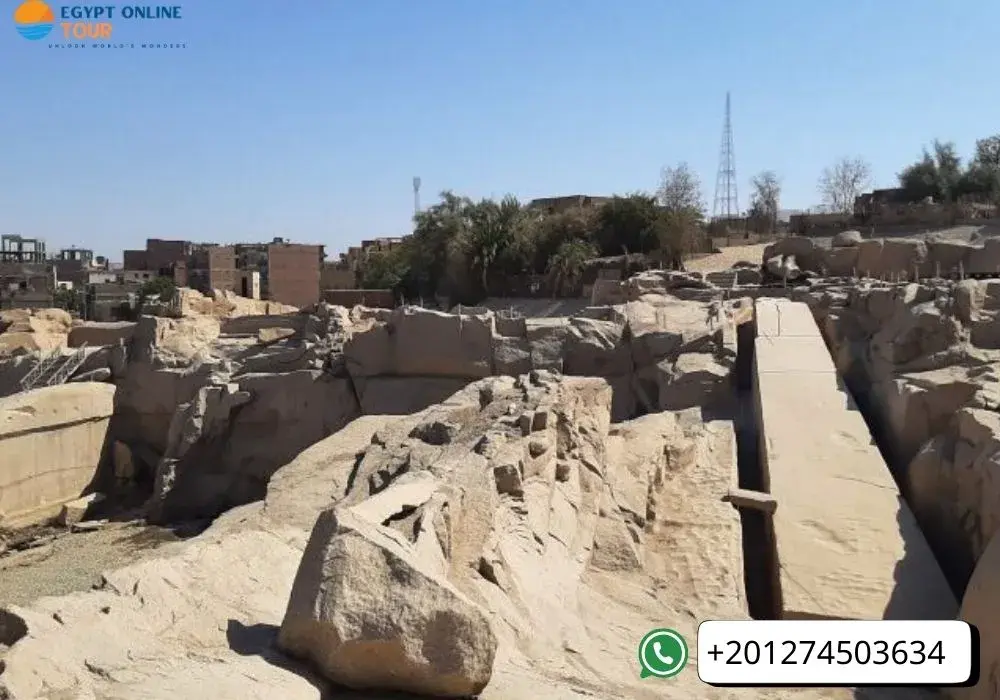
- Paths are a mix of sand, gravel, and uneven stone
- Wear closed shoes with thick soles and a good grip
- Avoid flip-flops and soft sandals
- Morning visits are better—ground stays cooler
- Surfaces may get hot or slippery, especially mid-day
- Some areas have stairs or ramps—use them where marked
- Don’t walk on restricted zones or quarry edges
- Ask a local guide if you’re unsure about safe paths
Family-Friendly and Mobility Considerations
- Children can enjoy the area, but need close supervision
- Avoid using strollers on gravel—use baby carriers if needed
- Bring water, sun hats, and light snacks for kids
- Shade is limited—carry a small umbrella if possible
- Wheelchair access is limited to flat sections near the entrance
- Seniors should consider bringing a walking stick
- Ask hotels or tour operators about mobility support in advance
Safety Tip | Details |
Footwear | Closed, comfortable, non-slip shoes only |
Surface Type | Gravel, stone, sandy, some steps |
Child-Friendly? | Yes, but stay alert on uneven sections |
Wheelchair Access | Limited—mostly near the main entrance |
Best Time to Visit | Early morning for cooler ground and shade |
Extra Help | Local guides can suggest easy routes |
This advice helps you enjoy the Unfinished Obelisk in Aswan safely and comfortably, with fewer surprises along the way.
Why the Unfinished Obelisk in Aswan Is Unique
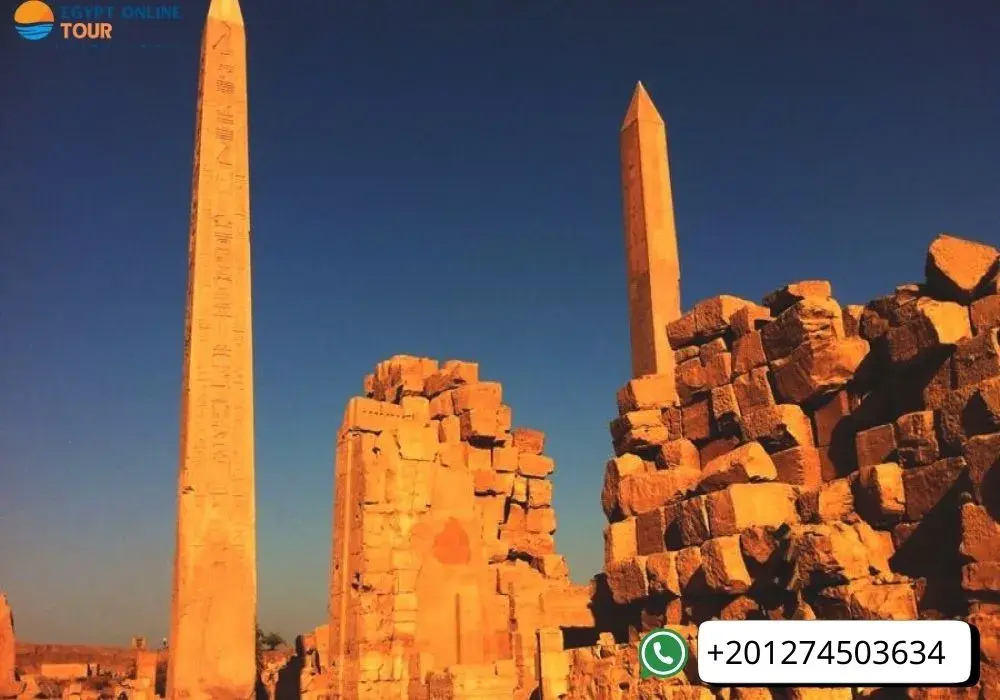
Most monuments tell stories of success. The struggle behind the scenes is depicted in Aswan's Unfinished Obelisk. What makes it rare is not what was completed, but what was left behind. You see the cracks. The missed cuts. The unprocessed granite remains attached to the earth. It gives you something polished sites can’t—proof of real human work, decisions, and limits. Read our guide about Does Dahshur Pyramids have bodies? to find out more about the mysteries surrounding them and whether or not they contain remains.
A Rare Window into Ancient Engineering
- Cracks in the granite show why the project was stopped
- Tool marks still cover its surface, untouched for 3,500 years
- Dolerite pounding stones nearby reveal real methods
- Trenches around the obelisk show cutting steps clearly
- Still joined to bedrock, unlike any finished monument
- You can walk through every stage from start to failure
- It proves ancient work used planning, not just power
- No myths—just visible, hands-on labor frozen in time
How It Compares to Finished Obelisks
- This unfinished piece is over 42 meters long
- It would’ve weighed more than 1,200 tons
- Other obelisks are smooth with texts; this one is raw
- Finished ones hide quarry steps—this one reveals them
- It teaches more than just names and rulers
- Here, you see failure, not just glory
See Is Egypt a popular place to visit in 2025?
Finished vs. Unfinished
Feature | Finished Obelisks | The Unfinished Obelisk |
Surface | Smooth and polished | Rough with obvious tool markings |
Weight (avg.) | 300–500 tons | Over 1,000 tons planned |
Status | Moved, now standing | Still in quarry, incomplete |
Story Told | Success and symbols | Process, effort, and failure |
Visitor Experience | View from a distance | Walk through each work step |
Nearby Attractions to Combine With the Unfinished Obelisk in Aswan
If you're visiting the Unfinished Obelisk in Aswan, don't stop there. Several top attractions sit just minutes away. You can easily see more history, culture, and local life in one short trip. Below are the best nearby places to visit. Each one adds real value to your day—and they’re all easy to reach.
Philae Temple and the High Dam
These two major sites are ideal to visit on the same day.
- Philae Temple sits on an island and honors the goddess Isis
- From the marina by the dam, you can take a boat there.
- The carvings, columns, and calm water views are worth the short ride
- Ideal viewing conditions are in the early morning or late afternoon.
- Combine it with a Dam stop to save time
- The Aswan High Dam shows modern Egyptian engineering
- It controls Nile flooding and powers much of Egypt
- The views from the top are wide and dramatic
- Expect basic signs; guides are helpful here
Nubian Museum and Aswan Old Souq
These two give you local culture and a relaxing end to your visit.
- Displays over 3,000 items that tell the story of Nubian culture and traditions.
- Exhibits include statues, jewelry, and everyday objects.
- Open daily, with clear English and Arabic labels
- Indoor setting, good for hot afternoons
- Aswan Old Souq is walkable, full of local shops
- Great for spices, scarves, and handmade gifts
- Visit in the evening for a lively local scene
- Many cafes nearby for a short break or a meal
Nearby Attractions Summary
Attraction | Type | Distance from Obelisk | Best Time to Visit | Entry Tip |
Philae Temple | Ancient Temple | ~15 min drive + boat | Early morning or sunset | Buy a ticket before the boat ride |
Aswan High Dam | Engineering | ~20 min drive | Morning or noon | It is better viewed with a guide |
Nubian Museum | Cultural Museum | ~10 min drive | Afternoon | inside the AC in the afternoon |
Aswan Old Souq | Market | ~10 min walk | Evening | Bargain politely |
These places match perfectly with a trip to the Unfinished Obelisk in Aswan. Together, they show both the old and new faces of this southern city—without needing a long trip.
Read about: Where is Memphis in Egypt?
Plan Your Visit with Us
Planning a trip to the Unfinished Obelisk in Aswan is easy when you group nearby attractions. Most of the city’s highlights sit within minutes of each other, so you can see more in one day without rushing. With the right timing, you enjoy history, culture, and local life all together.
Custom Aswan Day Plans Around the Obelisk
Morning – Start at the Unfinished Obelisk
- Arrive early (around 8 AM) to avoid heat and crowds.
- Spend 45–60 minutes walking around the quarry, tool marks, and trenches.
- Bring water, a hat, and closed shoes for comfort.
Midday – Philae Temple and Aswan High Dam
- Philae Temple, devoted to Isis, is only a short drive and boat trip away.
- Best visited before noon or near sunset for softer light.
- Views of Lake Nasser and contemporary engineering can be seen when combined with the High Dam.
- A guide makes the visit more meaningful.
Afternoon – Nubian Museum
- Escape the heat in this air-conditioned museum.
- Explore over 3,000 items that tell Nubian history and culture.
- Signs are clear in English and Arabic.
Evening – Aswan Old Souq
- Explore vibrant booths brimming with handmade goods, scarves, and spices.
- Best in the evening when it’s lively and cooler.
- Bargaining is part of the local experience—done politely.
- Cafes nearby make it a relaxed way to end your day.
Suggested Day Plan Table
Time of Day | Site/Activity | Notes |
Morning | Unfinished Obelisk | Cooler weather, fewer visitors |
Midday | Philae Temple + High Dam | Boat ride, island temple, modern site |
Afternoon | Nubian Museum | Indoor, AC, easy-to-follow exhibits |
Evening | Aswan Old Souq | Shopping, food, and local culture |
Alternative Day Plans
Aswan Day Plan | Main Attractions | Highlights |
Ancient Engineering Tour | Unfinished Obelisk, High Dam, Philae Temple | See an ancient carving, a modern marvel, and a temple saved from the Nile |
Nubian Culture Tour | Nubian Museum, Aswan Old Souq | Explore Nubian life and traditions, then shop for local crafts |
By planning your visit around the Unfinished Obelisk in Aswan, you can enjoy the city’s full story in a single day. From ancient engineering to Nubian culture and lively markets, every stop adds something different—making your trip both easy and memorable. See also: How to Plan a Family Vacation in Egypt from USA ?
Is the Unfinished Obelisk Worth Visiting?
Yes, and here’s why many travelers include the Unfinished Obelisk in Aswan in their itinerary. While it may seem like “just a large stone,” the site tells stories you won’t hear elsewhere. Below are real reasons visitors find it more than worth their time.
Reasons to Visit the Unfinished Obelisk in Aswan
- You stand where ancient workers once carved history into stone.
- The cracks show how even Egypt's greatest projects faced failure.
- It gives you rare insight into ancient quarrying techniques.
- Nearby signs explain the unfinished process in simple language.
- The area is quiet, so you can explore without crowds.
- It's close to other key sites like the High Dam and Philae Temple.
- Entry is cheap compared to other monuments.
- You’ll see original tool marks over 3,000 years old.
- The visit usually takes under 45 minutes.
- Great for travelers interested in archaeology and real history.
- You can combine it with a full-day tour of Aswan.
- If you love taking photos, the light here is best in early morning.
- Children can learn how ancient Egyptians worked, not just ruled.
- It’s easy to access by taxi or tuk-tuk.
- Visiting supports local guides and helps preserve the site.
Feature Details
Feature | Details |
Location | Northern Quarry, East Bank, Aswan |
Entry Fee | Around 80 EGP (locals), 120 EGP (tourists) |
Opening Hours | 8:00 AM – 5:00 PM |
Ideal Time to Visit | Morning or late afternoon |
Nearby Attractions | High Dam, Nubian Museum, Philae Temple |
One visit, and you’ll see why the Unfinished Obelisk in Aswan remains one of Egypt’s most honest archaeological stops.
Let our local travel experts help you design the perfect itinerary. Whether you're seeking adventure, culture, or relaxation, we've got you covered!
The Summary
The Unfinished Obelisk in Aswan is the tale of an ancient ambition that was never finished. Its cracks and tool marks reveal secrets no finished monument can show. Standing before it, you connect with the workers of 3,500 years ago. So, why just read about it when you can see it yourself? Plan your trip with Egypt Online Tour today and explore the Unfinished Obelisk in Aswan with expert guidance and unforgettable insight.