King Seti I Facts | Ancient Egypt Insights
- Sep 24, 2024
- 2,605
King Seti I Facts show a king who built slowly, smartly, and truly. He protected land, restored temples, and also carved history with calm hands. And his work still speaks, even now. But why does his name feel louder than other pharaohs? Because he built order first, peace after, and legacy last. So, if temples could talk, they would answer with proof, not pride. King is written in stone, not noise. But here’s the real question: What kind of king leaves clues even time fails to erase? Let’s walk into the story that stone refused to forget.
King Seti I – Who Was He?
King Seti I is one of Egypt’s strongest builders, fighters, and thinkers. He shaped temples, restored broken lands, and also rebuilt pride.
Below, you’ll see the key steps of his life, growth, and rise to power.
Birth, Dynasty, and Early Life
- King Seti I was born into the 19th Dynasty, so leadership was part of his bloodline.
- His father, Ramesses I, opened the door to rule, and young Seti grew up in the strategy, power, and politics.
- He trained early, so while other princes learned luxury, he learned duty.
- He studied armies, borders, diplomacy, but also temples, faith, and people.
- Because of this mix, he spoke the language of war and peace at the same time.
- Also, priests trusted him, soldiers respected him, and citizens felt safe around him.
- His mind was sharp, yet his patience was known, so conflict rarely shook him too soon.
- Even when young, he visited work sites, listened to builders, and asked questions others ignored.
- Therefore, leadership did not feel new to him, because he lived it long before the crown.
How King Seti I Rose to Power
- He did not grab power fast, but climbed it step by step, so loyalty reached him first.
- First, he served as a commander and proved he could lead calmly and firmly at once.
- Then, he handled border threats, but restored order without losing balance.
- Because his father aged, Seti stepped forward, and Egypt did not question the handover.
- After that, the crown landed on a man already trusted by temples, troops, and trade leaders.
- He ruled with action, and results arrived fast, so Egypt saw less fear and more building.
- Instead of noise, he chose temples, defense, maps, and repaired alliances.
- So, people followed him without force, because respect moved faster than fear.
If tranquil spots speak to your soul, visit Wadi El Rayan . Its natural beauty offers a quiet, calming escape.
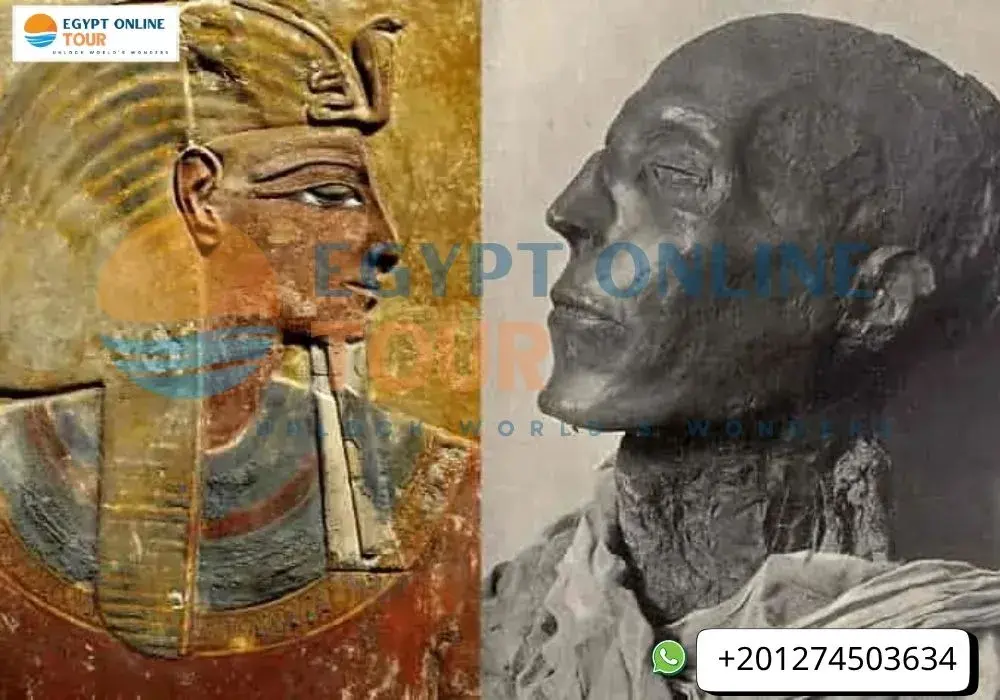
Quick Snapshot of King Seti I Facts
Detail | Value | Why it matters |
Dynasty | 19th | Egypt’s comeback era |
Father | Ramesses I | Opened the royal path |
Strength | Military + temples | Balanced power + faith |
Style | Firm, patient, builder | Fix first, shine later |
Legacy | Stability + temples | Still seen today |
King Seti I Facts show a ruler who became strong because he served first, listened more, and built deeper. His story is a lesson that power lasts when actions move before applause.
Looking for more? Discover what is there to do in Luxor .
King Seti I's Achievements in Ancient Egypt: A Legacy of Strength and Structure
King Seti I shaped Egypt with action, calm decisions, and long-lasting work. He led armies, rebuilt faith centers, and also left marks carved in stone. His reign was short, but steady, and it set Egypt back on firm ground.
King Seti I's Achievements in Ancient Egypt
Clear wins, real impact, and a reign that still tells its story today.
Military Campaigns and Border Expansion
- First, he secured Egypt’s borders because they were at risk from past conflicts.
- Then, he pushed north into Syria and also reclaimed lost land with speed.
- But he avoided needless fights, so troops stayed loyal and strong.
- He rebuilt forts and repaired defense routes, so supply lines became solid.
- Also, he restored Egypt’s name abroad, while keeping diplomacy in reach.
- His war records were carved on temples, so victories stayed visible for history.
- King Seti I Facts show he mixed strategy with restraint, and therefore kept balance.
Some places tell history, but here, you step right into it. Choose your Egypt tour packages and experience them for yourself.
Religious Contributions and Cultural Influence
- He reopened temples that had closed, because worship needed structure again.
- He honored Amun, Osiris, and Ptah, and also revived priest roles with order.
- While others built for show, he built for function, so rituals thrived daily.
- He also supported art that told stories, but without excess, therefore meaning came first.
- His choices shaped belief systems and then guided future rulers, too.
Building Projects and Architectural Legacy
- He began the Great Hall of Karnak, and later his son finished it, but the vision was his.
- The Temple of Abydos became his most personal work, and also his most detailed.
- He carved king lists there, so later ages could trace rulers with ease.
- His buildings mixed strength with rhythm, and therefore still feel alive, not distant.
Seti I's Impact
Area | What He Did | Why It Matters |
War | Secured borders, regained land | Brought safety and power back |
Faith | Reopened temples, revived worship | Restored spiritual structure |
Building | Karnak Hall, Abydos temple | Left records and lasting design |
His Facts show a king who rebuilt Egypt from the ground up, step by step, without noise but with purpose. Begin your journey now—book your Egypt Classic Tours with Egypt Online Tour and enjoy each moment from start to finish.

King Seti I Facts: A Glimpse into a Pharaoh’s Lasting Legacy
It ruled with craft, calm, and clarity. His era rebuilt Egypt’s strength, so his name lives in temples, walls, and battle paths. Here are the clearest King Seti I facts you need.
King Seti I Facts
- He ruled Egypt from 1290 to 1279 BCE, so his reign was short but full.
- He was the second king of the 19th dynasty, and his father was Ramesses I, so power was in the bloodline.
- His son was Ramesses II, but Seti built the base before his son took the crown.
- restored Egypt after unrest, so his rule focused on order first, and growth next.
- He fought well-planned wars and then secured trade, so Egypt stood stronger after the battles.
- rebuilt temples, and also revived old faith centers, so worship returned with force and flow.
- carved histories on stone, but told them in art, so even the walls speak his story now.
- He began the Great Hall of Karnak, and later his son completed it, so both names live there.
- His tomb in the Valley of the Kings is one of the deepest and also one of the best preserved.
- He pushed Egypt’s borders north and also calmed the conflict south, so the map stayed wide and firm.
- His name means “man of Set,” because Set was linked to storms but also strength and balance.
Why King Seti I Still Matters
- He rebuilt Egypt’s military lines, and so travel and trade grew safer.
- honored gods, so that tradition stayed steady across towns.
- valued detail, and therefore his carvings look sharp even now.
- He ruled with structure, but also with patience, so Egypt rose without breaking.
Focus | What Happened | Why It Still Matters Today |
Defense | Strengthened borders and reduced conflict zones | Trade routes became safer, and communities grew stable |
Faith | Reopened temples and supported priest roles | Religious life returned with unity and trust |
Art & Records | Carved king lists, battle scenes, and major events | Historians gained rare and clear records of the past |
Building | Expanded Karnak Hall and built the Abydos Temple | Tourism still thrives in these timeless landmarks |
King Seti I Facts show a ruler who built for tomorrow and not for show. He fixed, protected, carved, and planned. So today, when you read his name, you read Egypt standing tall again.
It’s the kind of peaceful day that helps you notice everything—just like the Unfinished Obelisk in Aswan , where history speaks in silence.
Let our local travel experts help you design the perfect itinerary. Whether you're seeking adventure, culture, or relaxation, we've got you covered!
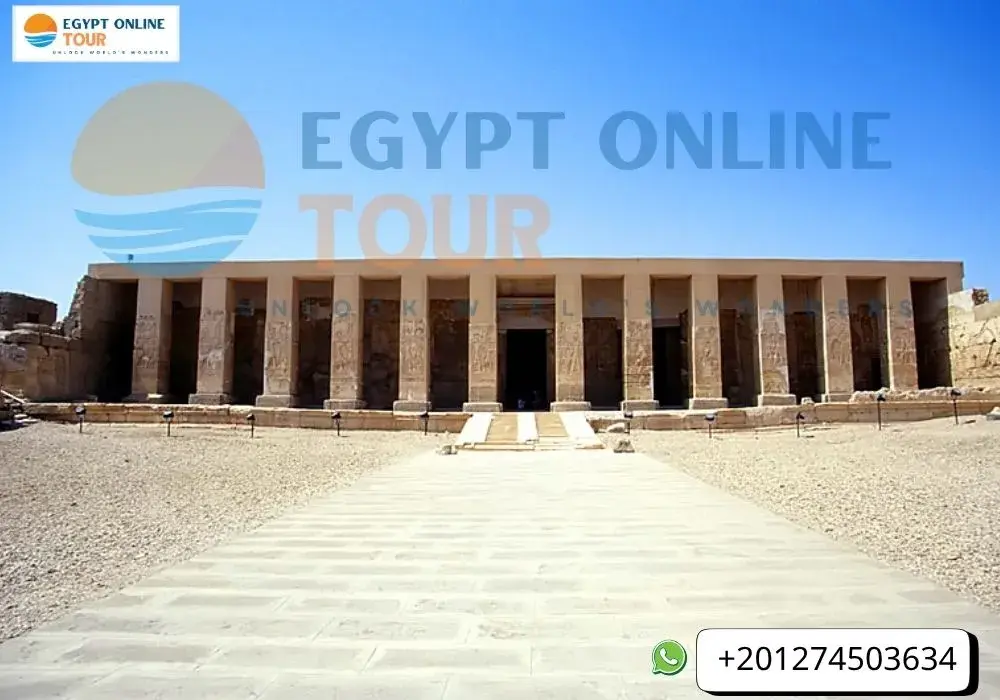
King Seti I and the Temple of Abydos
King Seti I built the Temple of Abydos with intent. It was not for display.
It was for truth, legacy, and worship.
The temple still stands as one of Egypt’s most honest sacred places. These King Seti I facts show why it still ranks high today.
King Seti I and the Temple of Abydos
- Seti built the temple to honor Osiris. He also built it to secure his name in time.
- The temple stands in Abydos, one of Egypt’s oldest holy cities.
It served ritual before beauty, unlike many temples. Seti began the work. Ramesses II later added parts. But Seti shaped its spirit. That spirit still leads the space today. - Many temples have changed over time. This one mostly stayed true to its first form. So, visitors feel the past in a real way.
No distance. No noise.
Highlights of the Temple Design
- The temple holds seven sanctuaries, not one. Each room honors a different god. The layout guides movement in a calm line.
- The pillars follow rhythm, not crowd. The carvings stay sharp but soft to the eye. Colors blend into stone and last longer. Light enters at a long, quiet angle. It adds depth without force.
- The space does not compete for attention. That lets the mind rest and observe.
The Abydos King List
- This list holds 76 king names.
It gives historians a strong timeline.
Some names exist only on this wall.
That makes it a rare source of truth. - Seti used it to honor past rulers.
He also used it to show Egypt’s long line of power.
Today, it helps build facts, not guesses.
So, this temple became sacred and historical.
Temple of Abydos Overview
Focus | What It Gives | Why It Still Matters |
Design | 7 rooms, rare layout | No other temple matches it |
Art | Clear reliefs, lasting colors | One of Egypt’s best carvings |
History | Abydos King List | Most trusted early king record |
Feeling | Calm flow, gentle light | Visitors absorb more, rush less |
The Temple of Abydos does not shout. It speaks in detail, calmly, and with proof. It teaches slowly and lasts long. That is why it still earns the highest place on every list that matters.
To explore more spiritual sites, head to Al-Moez Street —one of the best-kept treasures in Islamic Cairo. Will it be part of your Cairo itinerary?
Tomb of King Seti I in the Valley of the Kings
Tomb of Seti I, known as KV17, is one of the longest and deepest royal tombs in the Valley of the Kings. It tells stories with walls, colors, and texts, and also shows care, craft, and faith in every corner.
Inside KV17 – Decoration and Burial Texts
- First, the tomb runs over 130 meters, so it feels endless while you walk.
- Also, walls hold the Book of Gates, Book of the Dead, and sky charts.
- Colors still show reds, yellows, and blues, even now, because artists mixed strong pigments.
- Lines are thin, clean, and calm, so the scenes feel alive, not rushed.
- Figures hold steady balance, and faces carry soft detail, not sharp edges.
- In addition, stars fill the ceiling, so the sky follows you underground.
- While other tombs fade, this one still speaks because the craft had time, not haste.
- King Seti I Facts show he cared for accuracy, not noise, so the art served truth first.
- Therefore, every scene guides the eye with order, not crowd, and not chaos.
Discovery and Preservation of the Tomb
- Giovanni Belzoni found the tomb in 1817; however, the exposure brought both wonder and risk.
- At first, visitors touched the walls, so damage began fast.
- Later, Egypt closed many areas to shield the art and also to slow its decay.
- Now, teams track air, light, and moisture, so the tomb rests longer.
- Still, all care plans focus on slow visits, not mass entry, because breath and humidity harm paint.
- Today, rules protect the tomb, while paths let you learn without loss.
Focus | What You See | Why it Still Matters |
Art | Soft lines, rich colors, star ceilings | One of the best preserved royal styles |
Texts | Sacred books, cosmic maps | Key source for burial beliefs and rules |
Scale | 130m of corridors and rooms | Longest royal tomb with full story flow |
Care | Light, air, visitor limits | Keeps details alive for future eyes |
KV17 lasts because it balances beauty, care, and order. It teaches slowly, so you absorb more.
This is why King Seti I's Facts still lead the conversation today. The tomb does not compete. It simply stands above. If you plan to visit more places in Egypt, look at things to do in Naama Bay . It adds a calm and easy pace to your journey.
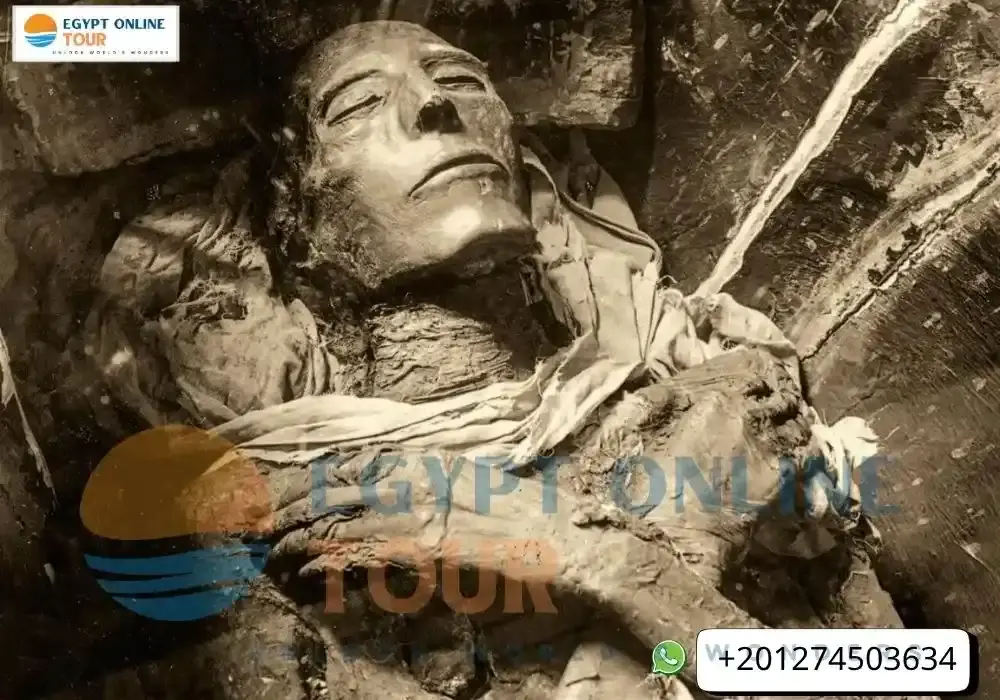
The Mummy of King Seti I
King Seti I left more than temples. He left a body that still tells the truth. His mummy shows health, strength, and clues about his final days.
Where and How They Found His Mummy
- They found his mummy in 1881, and this happened in Deir el-Bahari.
- It was inside a hidden tomb called DB320, so it was not his first burial place.
- Priests moved him there, and they did this to protect royal remains.
- They wrapped him again, and they wrote his name on the coffin.
- So, experts knew fast that the body was really his.
- His real tomb is KV17, but tomb robbers pushed priests to hide him first.
What Science Says About His Health and Death
- Experts say he died at about 40 to 45 years old, and tests confirm this clearly.
- He was about 170 cm tall, so he stood above many men of his time.
- He lived an active life, and his bones show strength from movement.
- But he also had arthritis, and this shows stress on his spine.
- His teeth show use, but they show no deep infection.
- His embalmers left his heart inside, so they followed a different method.
- He had no head injury, no chest wound, and no battle scar on his body.
- So, he likely died from illness, not war.
Why His Mummy Still Matters
What They Found | What It Shows | Why It Helps Now |
Reburial in DB320 | Priests protected his body | Shows care and planning |
Heart left inside | A different embalming rule | Tells how methods changed |
No battle wounds | Death was not violent | Fixes old myths |
Arthritis marks | He used his body hard | Matches records of work and war |
Strong bones | He trained and moved | Backs his role as a builder and fighter |
His mummy speaks facts, not tales. It ends with guesses, and it starts with real answers. It also shows his body worked, ruled, and lasted. These King Seti I Facts help us see the man, not the myth. Choose Egypt Luxury Tours for a journey that moves with ease, feels personal, and leaves memories that stay long after you return.
King Seti I’s Legacy and His Son Ramesses II
King Seti I Facts show a ruler who built Egypt’s future. His calm rule gave his son, Ramesses II, a strong start. Without Seti’s work, Egypt’s golden age may not have come.
Preparing the Way for Egypt’s Golden Age
- Seti I rebuilt roads, temples, and forts after years of unrest.
- He brought back peace. So, trade and farming grew again.
- Egypt’s borders stayed safe under his watch.
- He trained Ramesses II early. So, his son ruled with skill.
- Seti led with care. Others rushed, but he planned.
Why King Seti I Is Remembered as a Great Pharaoh
- He won wars but preferred peace.
- He loved Egypt’s old ways and helped restore them.
- His temple at Abydos shows fine carvings and strong design.
- Many say Seti’s work was more skilled than Ramesses II’s.
- His tomb is deep, wide, and still one of the best preserved.
King Seti I vs Ramesses II: Clear Comparison
Feature | King Seti I | Ramesses II |
Main Goal | Restore Egypt | Expand Egypt |
Famous Temple | Abydos | Ramesseum |
War Style | Small, planned wins | Big wars, wide reach |
Art Style | Sharp and fine | Large and bold |
Rule Style | Calm and steady | Loud and lasting |
King Seti I Facts prove he ruled for Egypt’s future. He did not rule to impress. He ruled to build. That’s why his name still stands today. If you're looking for a place that stays with you, this is it—like the Citadel of Qaitbay , where each stone still echoes a story.
Explore King Seti I’s World – Book Your Egypt Tour
Walk where stories began, not where brochures talk. See real art, real tombs, and real stone. This is not sightseeing. This is a memory you keep. These King Seti I Facts come alive when you stand in the places, not just read the names.
Explore King Seti I’s World – Book Your Egypt Tour
- Start in Abydos, and feel the quiet of the temple halls.
- Then move to Luxor, and see KV17 carved deep in the valley.
- Walk Kin arnak, and look at the walls that still hold color.
- Go with a guide who talks like a human, not like a script.
- Ask questions, and get answers that make sense, not long speeches.
- Stand in front of art made 3,000 years ago, and notice the lines are still clear.
- See how builders mixed plan and spirit, so each space feels calm, not loud.
- Touch history with your eyes first, and then with your mind.
- Take photos that tell the truth, not filters.
- Eat local food, and hear local stories, so the trip feels real, not staged.
- Meet travelers who care about detail, not just checklists.
- Book days that breathe, not rush.
- Leave room to absorb, not just record.
Read about: Tips on traveling to Egypt
Why This Trip Hits Different
- No noise tours, no hurry lines, no filler talks.
- Real places, real facts, and real time to take it in.
- You learn through feeling first, and then through facts.
- You leave with moments, not just dates.
Stop | What You Do | What You Gain |
Abydos Temple | See carvings, feel silence | Sense of balance and craft |
KV17 (Tomb) | Walk painted corridors | Respect for ancient detail |
Karnak | Stand in tall columns | Scale and mind clarity |
Local Village | Speak, eat, listen | Human link to the land |
Book Notes That Matter
- Bring soft shoes, so your steps stay quiet.
- Bring curiosity, and leave assumptions.
- Go slow, but see deep.
- Ask why, not just when.
- Let the place change the pace of your thinking.
Egypt does not ask for applause. It only asks you to pay attention. And when you do, it speaks back in detail, balance, and awe. You walk away feeling lighter, slower, and grounded, much like Dakhla Oasis , where quiet carries its own weight.
Summery
History is best seen, not just read. These King Seti I facts show how much he shaped Egypt’s past—and how much still waits to be seen. From his tomb to his temple, each step tells a deeper story. Want to explore them yourself? Egypt Online Tour helps you do it with care, ease, and local insight. Book your Egypt Classic Tour now, and walk where kings once stood. Let your journey begin with the real story.