Colossi of Memnon | Ancient Statues in Luxor
- Sep 24, 2024
- 3,559
The Colossi of Memnon are among the most iconic landmarks of ancient Egypt, standing tall on the West Bank of Luxor as timeless guardians of history. These majestic sstatues, carved from massive stone blocks, have fascinated travelers, historians, and poets for centuries.
They are more than just remnants of the past; they are storytellers, carrying tales of Pharaoh Amenhotep III, Greek legends, and even mysterious sounds once heard at sunrise. Today, they continue to attract visitors from around the world, blending ancient grandeur with modern tourism appeal.
History of the Colossi of Memnon
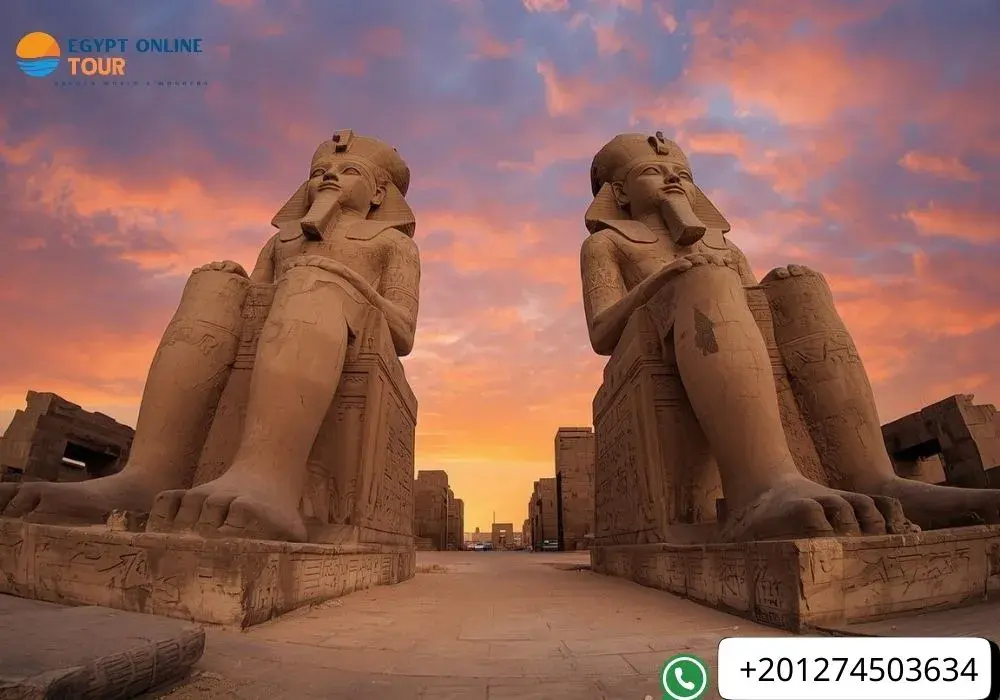
The Colossi of Memnon are among the most remarkable monuments of ancient Egypt, not only because of their size but also because of the centuries of history and cultural exchange they represent. Their story begins in the reign of Pharaoh Amenhotep III during the 18th Dynasty and continues through Greek and Roman reinterpretations, natural disasters, and modern archaeological studies.
The Legacy of Pharaoh Amenhotep III
Pharaoh Amenhotep III ruled between 1391 and 1353 BCE, depending on the source, during what is considered the Golden Age of the 18th Dynasty. Wealth, artistry, and monumental building like never before marked his reign. It was for this king’s great mortuary temple that the Colossi of Memnon were raised. The grand citizens were placed on the West Bank of Thebes (modern Luxor), facing east over the Nile toward the rising sun.
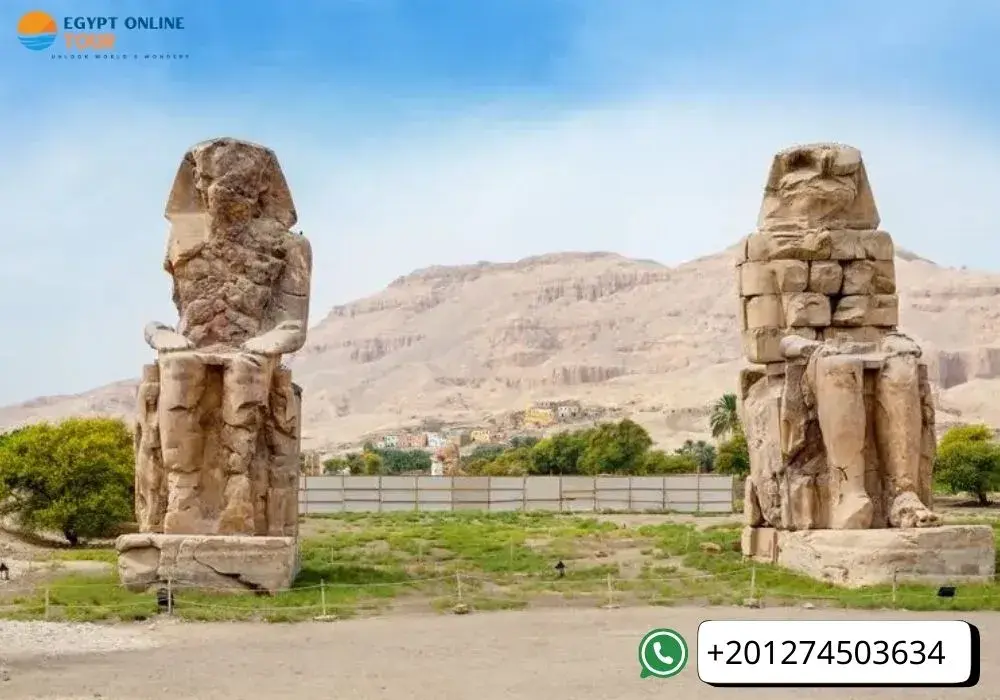
- Statues show Amenhotep III sitting on a chair with his hands on his knees looking toward the place where the sun rises. Each seat has pictures of Nile gods carved into it.
- These carvings stand for growth, plenty, and never-ending life. They were made to watch over the doorway of his death house, a building that once took up more space than the Karnak Temple.
- The Nile destroyed the temple with repeated flooding, and later it was looted for stone, but the two statues sat as eternal guardians to the memory of the Pharaoh.
Amenhotep III’s rule stressed the divine nature of the Pharaoh and thus the Colossi showed that splendor. By ordering statues of such size 18 meters high and weighing 720 tons each he strengthened the notion of the Pharaoh as a god-like being meant for everlasting recall.
To understand more about the Pharaohs and the fascinating timeline of Egypt’s history, you can explore our detailed guide on When Did Ancient Egypt Start and End .
Why the Greeks Called Them Memnon
Ages after they were raised, the Colossi gained new fame during the Hellenistic and Roman times. When Greek sightseers came to Egypt, they were awed by the great size and strange feel of the figures. Wanting to tie them to their own myths, they linked them with Memnon, a fabled Ethiopian king who battled in the Trojan War.
- Memnon, son of Eos (the dawn goddess), was mourned by her every morning after his death at Troy.
- After an earthquake in 27 BCE, the northern statue at Thebes emitted dawn sounds, believed by Greeks to be Memnon’s voice greeting his mother.
- This led both statues to be called the “Colossi of Memnon,” though they actually depict Pharaoh Amenhotep III.
Memnon, son of Eos, the dawn goddess, was mourned by her each morning after his death at Troy. After an earthquake in 27 BCE, the northern statue at Thebes began producing sounds at sunrise, which the Greeks believed to be Memnon’s voice greeting his mother.
This association gave both statues the enduring name “Colossi of Memnon,” though they actually depict Pharaoh Amenhotep III. Greek and Roman writers such as Strabo and Pausanias recorded their impressions, ensuring the statues’ fame throughout the Mediterranean world. Thus, the Colossi became not only Egyptian symbols but also global monuments of myth and legend.
When Was the Colossi of Memnon Built?
The Colossi of Memnon, built circa 1350 BCE, are a powerful and enduring testament to the might and skill of Egypt. After all these yearss they still have the power to amaze.
- Each statue was carved from quartzite sandstone which came from quarries around Cairo, some 700 km from Luxor.
- The transportation of these massive blocks was a feat of engineering that would have required approximation so there is a definite suggestion based on circumstantial evidence that sledges, wooden rollers and the shifting of stones carried by the floodwaters of the Nile played a role in the process.
- When they were brought to Thebes, the statues were erected at the gateway of an immense mortuary temple nearly 700 meters long and 550 meters wide.
- Earthquakes in 27 B.C. and subsequent centuries caused severe damage, especially to the northern statue, whose cracks caused the mysterious “singing” that was heard at sunrise.
But despite centuries of erosion, the Colossi still stand at their original ssite as among the oldest and largest statues of man in existence, serving as silent witnesses to the power of Amenhotep III and the wise prowess of ancient Egyptian builders.
Location of the Colossi of Memnon
When you cross over to Luxor’s West Bank, the Colossi of Memnon are hard to ignore. People didn’t just put these statues down for decoration; they were built to face the sunrise and line up with the temple of Amenhotep III. Pharos of that time cared a lot about that kind of alignment. To them, this wasn’t just land on the other side of the Nile it was the place of the setting sun, tied in their minds to death and the world that came after.
West Bank of Luxor: Facing the Rising Sun
- In the seasonal inundation of the Nile, the movement of stones across the floodplain contributed subtly to the unfolding of events, as recorded in the annals of early civilization.
- In Egyptian religion, both statues face east to embrace the dawn as a sign of rebirth and immortality.
- A vivid contrast between life and eternity, the backdrop mixes the lush Nile farmlands with the parched Theban hills' crags.
Amenhotep III's great vision is shown by his decision to build his mortuary temple here in order to link himself with the sun's endless cycle of death and rebirth.
Let our local travel experts help you design the perfect itinerary. Whether you're seeking adventure, culture, or relaxation, we've got you covered!
Landmarks Nearby the Colossi
Going to view the Colossi of Memnon normally fits into a larger excursion. Many tours begin here before venturing more into the West Bank, as they are like a starting point for all the stunning historical sites in Luxor.
- Valley of the Kings (4 km away) is one of the most important places to visit nearby. This is where more than 60 Pharaohs are buried, including the famous tomb of Tutankhamun. Hidden rooms inside hold riches and inscriptions that reveal how ancient Egyptians buried their leaders.
- Located 5 km away, the Temple of Hatshepsut is a gorgeous structure erected into Deir el-Bahari's cliffs for Queen Hatshepsut. Among Egypt's most remarkable buildings, it has layers and columns. Well known for its massive entry gates and elaborate carvings highlighting Ramesses III's military victories, Habu (3 km distant) is the temple where he was honored.
- Ramesseum, located 2 km away, is a temple that Ramesses II built. It is sometimes called the "Mansion of Millions of Years". In the past, it had huge statues nearly as large as the Colossi of Memnon.
- Valley of the Queens (6 km away): Here lie the wives and children of kings, including the famous tomb of Queen Nefertari
- Luxor Temple is in the city of Luxor (East Bank), right in the center.The distance between them is about 4–5 km by road, which takes around 15–20 minutes by car (including crossing the Nile bridge).
Ever wondered when the breathtaking Luxor Temple was built?Read the full story in our article: When Was the Luxor Temple Built
Accessibility and Modern Surroundings
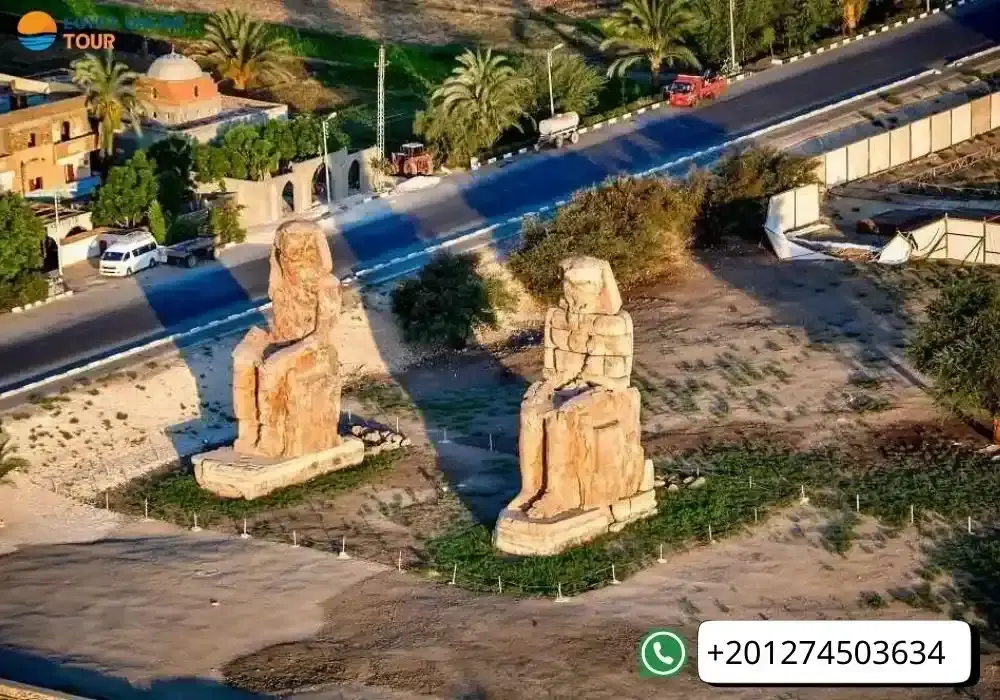
Modern good tourist systems and pleasant roads make visiting the Colossi quite simple. It is one of the most accessible ancient sites to visit in Luxor as anybody can go there for free.
Many people drop by the Colossi fast before going on to other sites on the West Bank, but those who give a little more time Looking around will reveal carvings, intriguing architectural features, and an extraordinary feeling that stays with one. Close by, you may also locate local settlements where artisans sell traditional Egyptian crafts and mementos.
Hot-air balloon trips soaring over the statues at daybreak offer breathtaking views of the monuments and nearby sites.
Symbolism of the Location
- West = afterlife: Traditionally linked with death and the afterlife, the West Bank of the Nile is the site of many tombs and temples.
- Eastward gaze: Rebirth; the statues face the rising sun, representing the Pharaoh's ongoing link to the cycle of life and death.
- Gateway role: Located at the entrance to Thebes's most holy burial site, they represent the journey from life to death.
The Colossi's placement is deliberately chosen to support Amenhotep III's authority and everlasting presence rather than only physical one, therefore reinforcing their spiritual and symbolic character.
Planning a trip to Luxor?Check out our article: What Is There to Do in Luxor
Unique Legends and Myths
Apart from being works of art and engineering marvels from ancient Egypt, the Colossi of Memnon are encased in centuries of stories that changed them into among the most well-known features of the ancient world. From strange sounds at sunrise to artistic inscriptions left by international visitors, the sculptures came to stand for mystery, faith, and cross-cultural interaction.
The Story of the Singing Statues
Apart from being works of art and engineering marvels from ancient Egypt, the Colossi of Memnon are encased in centuries of stories that changed them into among the most well-known features of the ancient world. From strange sounds at sunrise to artistic inscriptions left by international visitors, the sculptures came to stand for mystery, faith, and cross-cultural interaction.
One of the most interesting stories linked to the Colossi is about the "singing statues. " A strong earthquake hit in 27 BCE, causing the northern state to crack in the middle.
When the sunlight first hit the damaged stone, it warmed up fast. As the air squeezed through the cracks, the stone made a weird but lovely sound, which some said was like a harp or a soft bell ringing. People from long ago described the noise as an eerie whistle or hum. The locals thought it was the spirit of Memnon, greeting his mother, who was the goddess Eos (known as Aurora in Roman myths).
This strange sound usually happened at sunrise, making it feel even more magical and fitting with how Egyptians connected the sun's rise to new beginnings. For many years, listening to the statue "sing" was seen as a good sign.
Travelers, poets, and even emperors visited Luxor to experience this wonder. However, after some repairs were done during the reign of Roman Emperor Septimius Severus in the 3rd century CE, the sound eventually disappeared, but the tale of the singing Colossi continued on.
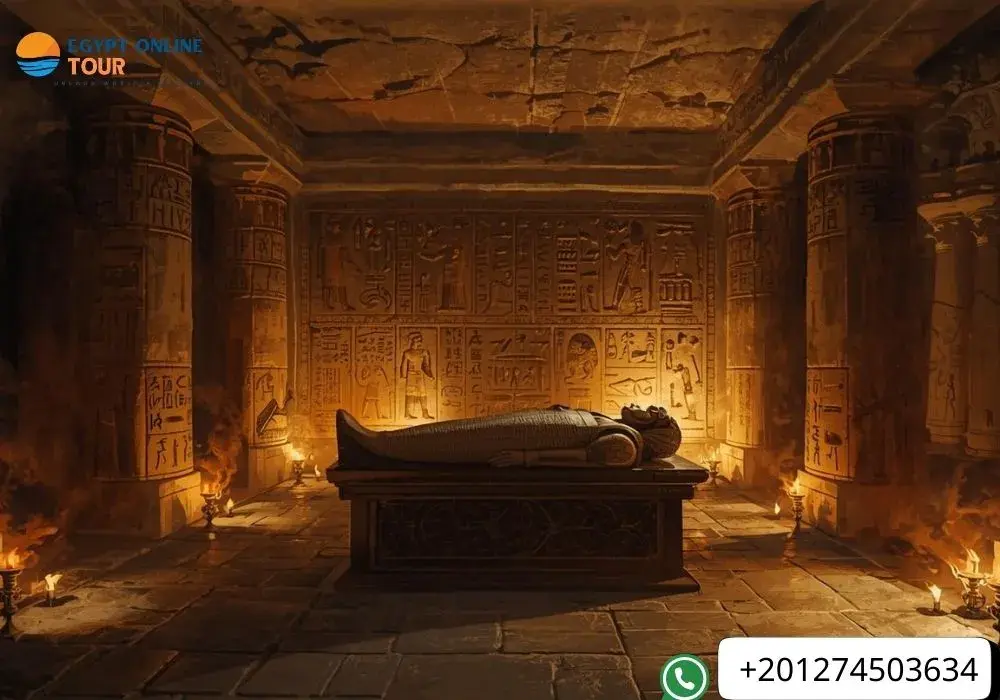
Inscriptions from Greek and Roman Travelers
The appeal of the Colossi of Memnon was universal. Greek and Roman visitors often inscribed their impressions right on the stone itself, carving inscriptions. on the statues' legs and base. Many of these scars are still visible today and are regarded as extremely valuable historical documents.
- Some inscriptions are basic signatures noting the names of visitors to the location.
- Others are poetic portrayals of the statues' "voice," expressing devotion and amazement.
- Emperor Hadrian, among the most well-known guests, apparently heard the statue sing and left an inscription recording the occasion.
These writings provide unique evidence of ancient tourism, proving that the Colossi were not only religious monuments but also global attractions long before modern tourism began. They show how people from different civilizationsns engaged with Egyptian heritage, creating a fascinating cultural dialogue that enriched the statues’ legacy.
The myths of the Colossi of Memnon demonstrate how monuments can transcend their original purpose. Built as silent guardians for Amenhotep III, the statues became celebrated worldwide as mystical beings, blending Egyptian spirituality with Greek mythology. Today, visitors still come not only to see their size and artistry but also to stand in the presence of a legend that has endured for millennia.
If you’re wondering how to make the most of your trip to Egypt and enjoy the Colossi of Memnon without worrying about planning, the 5 Days Cairo to Luxor Tour Packages . This carefully designed package takes you on an unforgettable journey through Egypt’s most iconic destinations.
Visitor Information and Tips
Planning a visit to the Colossi of Memnon is an exciting highlight of any trip to Luxor. These towering statues are free to visit, easy to reach, and surrounded by some of the most important archaeological landmarks in Egypt. However, a successful trip is not only about reaching the site, it's about making the right preparations to ensure comfort, safety, and the best possible experience. Here are detailed tips every traveler should know before exploring or ing th ' e Colossi.
How Safe Is It to Visit the Colossi of Memnon?
- Luxor is considered one of the safest cities for tourism in Egypt, with tourist police regularly patrolling the area.
- The site is open-air, well-visited, and generally bustling with tourists, which provides an added sense of safety.
- As with any destination, it is best to keep valuables secured and avoid carrying large amounts of cash.
- Hiring a local licensed tour guide is recommended for both safety and to gain cultural and historical insights.
Recommended Dress Code for Visitors
- Lightweight and modest clothing is advised to respect local cultural norms. Loose garments are more comfortable in the desert climate.
- Avoid overly short or revealing outfits. Respectful attire enhances your experience and interaction with locals.
- Bring a hat, sunglasses, and sunscreen, as the Luxor sun can be intense throughout the year.
- Wear comfortable walking shoes since the terrain around the statues can be sandy and uneven.
To better understand the cultural etiquette and what are some traditions in Egypt , you can read our detailed guide, which will help you prepare for a respectful and memorable trip.
Best Time of Day for Photos
- Early Morning (Sunrise): The most magical time to visit. The statues are bathed in golden light, and the site is less crowded, creating an intimate atmosphere.
- Late Afternoon (Sunset): Perfect for photography, with dramatic shadows and warm hues in the background.
- Midday: Often too hot and bright, making it less ideal for photos and exploration.
- Pro tip: Use a professional camera or a high-resolution phone to capture the statues against the backdrop of the Theban hills and Nile Valley.
Read about: Tips on traveling to Egypt
How to Reach the Colossi Easily
- The Colossi are located just 15 minutes by car from Luxor city center, on the West Bank of the Nile.
- Options for reaching the site include:
- Taxi or private car hire, offering comfort and flexibility.
- Tour buses and group tours, often including the Colossi as the first stop on a West Bank itinerary.
- Traditional Nile ferries, followed by local transport, for an authentic experience.
- Many organized tours, such as those by Egypt Online Tour, include the Colossi as part of a larger exploration of West Bank highlights like the Valley of the Kings and Hatshepsut’s Temple.
How Much Does It Cost to Go to the Colossi of Memnon?
- Visiting the Colossi is completely free of charge, a rare bonus compared to many other archaeological sites.
- Travelers only need to budget for transportation or tour guide fees.
- Several travel companies bundle the visit into comprehensive West Bank packages, which can also include tombs, temples, and even hot-air balloon rides.
- For a truly memorable experience, combine your visit with a sunrise balloon flight over Luxor, giving you a bird’s-eye view of the Colossi and surrounding landmarks.
Final Notes for Visitors
The Colossi of Memnon are more than just two statues; they are an introduction to the history, spirituality, and enduring myths of ancient Thebes. By preparing properly for your visit, you can ensure that your experience is safe, comfortable, and unforgettable. Whether you’re there at sunrise to enjoy the golden glow or in the late afternoon for stunning photographs, the Colossi promises a memory that will last a lifetime.
Read about: How Much Does It Cost to Go to Egypt
Colossi of Memnon Facts
The Colossi of Memnon are not only historical but also fascinating because of their unique features and stories. Here are some quick facts every visitor should know:
- Height: Each statue stands about 18 meters (60 feet) tall.
- Material: Carved from quartzite sandstone transported nearly 700 km from quarries near Cairo.
- Weight: Each colossus weighs around 720 tons, showing the engineering genius of ancient Egyptians.
- Age: Built around 1350 BCE during the reign of Pharaoh Amenhotep III.
- Purpose: Served as guardians of Amenhotep III’s mortuary temple, now mostly in ruins.
- Greek legend: The statues were named “Memnon” by the Greeks after a Trojan War hero.
To understand this better, explore our detailed article: What did Greek replace Egyptian gods name with , which explains how mythology shaped the identity of monuments like the Colossi of Memnon.
- Famous phenomenon: One statue was believed to “sing” at sunrise after being cracked by an earthquake.
- Global fame: Roman and Greek travelers carved inscriptions on the statues, which are still visible today.
Read about: Facts about The Temple of Karnak
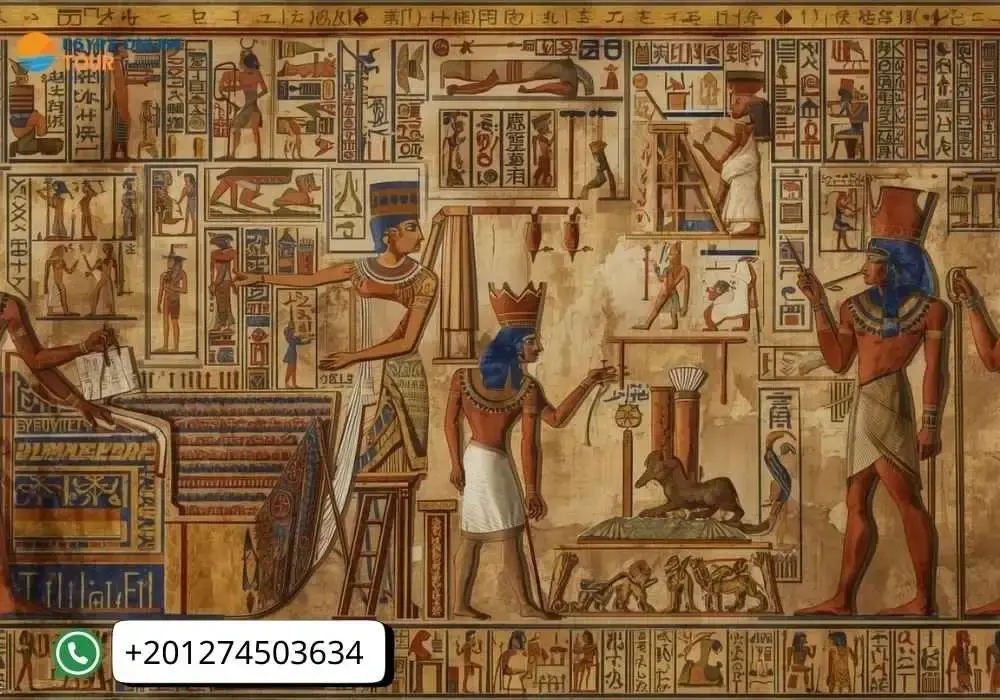
An Experience You Will Never Forget
Visiting the Colossi of Memnon is not just sightseeing, it's a memory that lasts a lifetime. Here’s why:
- Magical sunrise: At dawn, the statues glow with golden light as the sun rises over the Nile, creating an unforgettable view.
- Unique atmosphere: The open space around the statues allows you to walk freely, observe details, and feel the grandeur of ancient Egypt.
- Ancient inscriptions: Travelers from Greece and Rome carved their impressions on the statues, still visible today.
- Perfect for photos:
- Early morning = best natural lighting.
- Low angles emphasize the height.
- Including a person in the shot shows scale.
- Ideal itinerary: Many visitors combine the Colossi with nearby attractions such as the Valley of the Kings or Hatshepsut’s Temple.
- Special experiences: A dawn hot-air balloon ride followed by a visit to the Colossi makes the trip even more memorable.
These facts highlight why the Colossi remain a must-see wonder of Luxor for history lovers and curious travelers alike.
Why You Should Visit the Colossi of Memnon
Visiting the Colossi of Memnon is not just about seeing two statues, it's about experiencing a journey through time, legend, and the cultural heart of Luxor. For thousands of years, these monuments have drawn kings, poets, scholars, and modern travelers alike. Their grandeur, symbolism, and accessibility make them an essential stop for anyone exploring Egypt.
A Timeless Symbol of Luxor’s Heritage
The Colossi represent more than stone; they embody the power, resilience, and grandeur of ancient Thebes. Built to guard Amenhotep III’s mortuary temple, they remind us of the Pharaoh’s divine authority and Egypt’s architectural brilliance.
- Historical Depth: Surviving floods, earthquakes, and centuries of erosion, they remain standing as symbols of permanence.
- Cultural Fusion: From Egyptian builders to Greek storytellers and Roman emperors, the Colossi have connected civilizations across time.
- Iconic Landmark: Alongside the pyramids and the Sphinx, they are among the world’s most recognized ancient monuments.
For Luxor, the statues are not just relics, they are guardians of heritage, standing tall as silent storytellers of a civilization that shaped human history.
If a single day at the Colossi of Memnon sparks your curiosity, just imagine what a full week exploring Egypt’s ancient wonders could unveil. With Egypt Classic Tours , you can explore Egypt’s most iconic landmarks while traveling in total comfort.
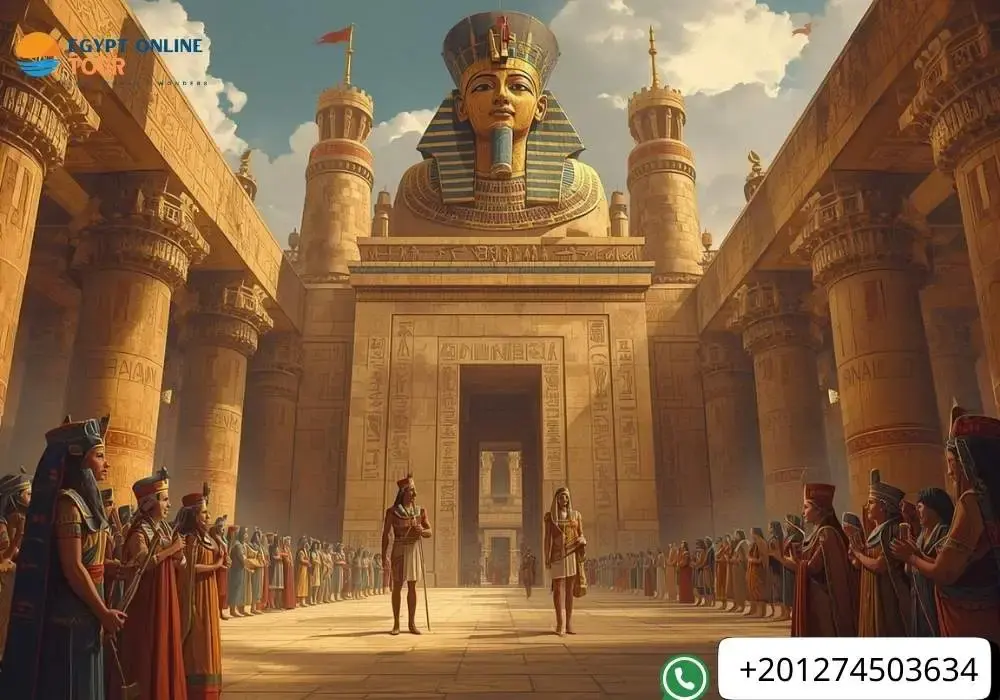
An Experience You Will Never Forget
Standing at the base of the statues is an awe-inspiring moment. Their colossal height, weathered faces, and silent presence create an atmosphere that is both humbling and mysterious.
- At Sunrise: Watch as the first rays of the sun turn the stone golden, recreating the mystical aura that enchanted ancient travelers.
- For Photographers: Capture stunning images with the Theban cliffs or fertile Nile valley as backdrops.
- As a Gateway: Use the Colossi as the starting point for exploring nearby treasures like the Valley of the Kings, Hatshepsut’s Temple, and Medinet Habu.
Many visitors describe the experience as more than sightseeing; it's a moment of reflection, where history, legend, and beauty merge into one unforgettable memory.
Learn about: Is it Safe to Visit Pyramids of Giza
Plan Your Journey with Egypt Online Tour
To truly experience the Colossi and their surrounding wonders, traveling with a trusted operator makes all the difference. Egypt Online Tour has been helping travelers explore Egypt since 2006, offering tailored experiences designed for comfort, cultural depth, and unforgettable memories.
Why to choose Egypt Online Tour?
- Expert Guidance: Licensed Egyptologists who bring the history and legends of the Colossi to life.
- Seamless Logistics: Private transport, hotel pick-ups, and flexible itineraries designed around your schedule.
- Comprehensive Packages: Combine the Colossi with West Bank highlights, hot-air balloon rides, or luxury Nile cruises.
- Trusted Reputation: With decades of experience and thousands of satisfied travelers, Egypt Online Tour guarantees professionalism and authenticity.
Whether you’re a history enthusiast, a photographer seeking the perfect shot, or a traveler chasing once-in-a-lifetime experiences, Whether you’re captivated by the myths of the “singing statues,” exploring nearby temples, or capturing the perfect sunrise photograph, Egypt Online Tour makes your trip effortless and enriching.
With tailored trips designed for solo travelers, families, and groups, your journey to the Colossi of Memnon will not just be a stop it will become an unforgettable chapter in your exploration of Luxor.
To make the most of your adventure, explore our wide range of Egypt tour packages , which combine the Colossi with other timeless wonders like the Valley of the Kings, Karnak Temple, and even luxury Nile cruises. These packages ensure every moment of your trip is seamless, enriching, and truly memorable.
Discover Egypt with Egypt Online Tour
Explore the wonders of Egypt seamlessly with Egypt Online Tour, a licensed and trusted travel operator delivering premium experiences since 2006. They specialize in crafting diverse and immersive tours from the timeless marvels of Cairo, Luxor, and Aswan to serene desert landscapes, majestic Nile cruises, and spiritual Holy Land journeys.
What Makes Egypt Online Tour Stand Out?
- Extensive Experience & Reliability:
Held license number 1466 A from Egypt’s Ministry of Tourism, and backed by over 21 years of expertise, Egypt Online Tour excels in both individualized and group travel experiences across Egypt.
- Comprehensible Travel Options
Classic and luxury tours in Cairo, Luxor, Aswan, Alexandria, and beyond.
- Customized Nile cruise packages with expert guides.
Specialized offerings, including Holy Land pilgrimages, desert safaris, and multi-day adventures.
- Premium Comfort & Access:
Handpicked 5-star accommodations, private guides, and award-winning service.
- Luxury Nile cruises and tailored itineraries ensuring total comfort.
- Local Expertise & Global Reach:
Decades-long partnerships with top hotels and transport providers guarantee competitive rates and smooth logistics.
Tailored for Every Traveler
Whether you're seeking a leisurely exploration of the Pyramids, an immersive Nile cruise, spiritual discovery in the Holy Land, or luxurious desert escapades, Egypt Online Tour creates your perfect itinerary. Their focus on safety, personalization, and cultural depth ensures not just a trip, but an unforgettable journey.
Read about: How to Spend Summer Vacation in Egypt
Let our local travel experts help you design the perfect itinerary. Whether you're seeking adventure, culture, or relaxation, we've got you covered!
Conclusion
A journey to the Colossi of Memnon is not just about visiting two giant statues, it is an encounter with over 3,400 years of history, an experience that blends ancient Egyptian grandeur with timeless myth and legend.
These monumental figures of Pharaoh Amenhotep III, once guardians of the largest mortuary temple in Thebes, continue to inspire awe among travelers from every corner of the globe. The stories of the “singing statues,” recorded by Greek and Roman visitors, remind us how this site has captured imaginations for millennia.
To elevate your visit, Egypt Online Tour offers expertly guided trips, tailored itineraries, and seamless travel services that ensure every detail is taken care of. With over 20 years of trusted experience, they transform your exploration into a truly unforgettable adventure. Book your journey today and let the Colossi of Memnon tell you their timeless story in person.